



Twisted Metal III arrives as the third entry in Sony's demolition-derby carnival of mayhem, and the first to be produced entirely under the 989 Studios banner. The game's premise is unchanged: a dozen grotesque machines enter a tournament of violence, the last driver standing meets the shade-draped organizer Calypso and gets a single, likely ill-advised wish. At a glance this is comfort food for anyone who loved the first two games - familiar vehicles, familiar goals, and the same manic, arcade-minded promise of turn-and-shoot action. Up close, however, the differences are as telling as the similarities. 989 Studios has pushed the series to a smoother frame rate and a wider set of arenas, but the result is a game that alternately excites and frustrates, as if a promising car with a rattling engine has been handed back to you with polished hubcaps and a suspect gearbox.
Twisted Metal III keeps the essentials that made the series a cult favorite: twelve selectable vehicles, mounted machine guns with infinite ammo, and a collection of weapon pickups that range from missiles and mortars to explosive napalm. The game offers two principal modes: Tournament, the single-player progression of eight levels, and Deathmatch, the local multiplayer brawl for up to four players (with computer-controlled opponents available to fill out a fight). The Tournament mode can be tackled alone or with a computer ally; choosing the latter is a practical concession for those who prefer co-op carnage, but it comes with a cost - the final cinematics are locked off if you rely on an AI partner. Controls are straightforward in the arcade tradition: a gas, a brake, a turbo, directional steering and weapon selection via the d-pad or sticks. Each vehicle also carries a unique Special Weapon Attack that recharges over time, an Advanced Attack that requires a filled energy bar and multi-button inputs, and the satisfying possibility of Combo Attacks which weave weapon pick-ups and maneuvers into more destructive results. These systems reward experimentation; spend some time with a vehicle and you begin to discover routes, combo chains and hit-and-run tactics that make encounters more than just button-mashing. Where the gameplay buckles is the game's physics and level flow. Enemies and player vehicles feel weighty in an inconsistent way - at times glued to the road, at times high-centered on invisible geometry. This makes precision driving and some advanced maneuvers feel unreliable. Levels are openly designed, with destructible landmarks and wide arenas that encourage improvisation: demolished Big Ben, the ruins of Hollywood after the 'Great Earthquake of 2007', Santa's North Pole workshop and a finale set on Calypso's blimp. These locations are imaginative and occasionally thrilling in their set pieces, but lacking in coherent pacing. Enemy placement can produce sudden, unavoidable damage rather than cleverly orchestrated threats, and the AI's behavior oscillates between opportunistic and oddly passive. Multiplayer is the saving grace. With four controllers clustered on the CRT, Twisted Metal III becomes its best self: frantic, unfair, and wickedly fun. The balance problems that mar single-player are less noticeable when friends are in the mix, because human creativity fills in for mechanical deficiencies. The soundtrack - a hard-edged collaboration featuring Rob Zombie and Pitchshifter - adds a layer of adrenaline that fits the multiplayer perfectly. For parties and rental nights, Twisted Metal III delivers more than enough explosives to earn its keep. For the solo player chasing endings and fair, consistent challenges, the game is disappointingly uneven.
The visuals are of a distinctly late-1990s PlayStation pedigree: polygonal models, texture-mapped environments and a graininess that frequently betrays the hardware's limits. 989 Studios bumped the frame rate to a smoother 30 frames per second (the earlier games ran at around 20), and that decision helps the action feel more immediate and responsive when the camera isn't being assaulted by pop-in. Draw distance and texture resolution remain modest; vistas are often punctuated by blocky structures and low-detail props. Lighting is competent but rarely ambitious, and occasional texture warping and clipping remind you that this is not the era of rich shaders and high-polygon fidelity. Levels are designed with spectacle in mind: a London clock tower you can shatter, Tokyo rooftops, a Hangar 18 with an accessable spacecraft, and a blimp finale where defeated opponents regenerate until a hidden device is destroyed. These set pieces are imaginative and give the game a cinematic sense of place, even if the visual execution sometimes reads as 'clever concept, limited means.' The user interface is readable, weapon pickups are clearly signposted, and HUD elements such as the health bar, turbo meter and Advanced Attack Energy Bar do their job without fuss. Critics at the time complained of 'grainy' visuals and 'uninspired' level design, and there is merit to those complaints; Twisted Metal III looks like a game that had creative energy but not always the graphical budget to match it.
Twisted Metal III is an awkward transitional entry: earnest, occasionally brilliant and often flawed. 989 Studios preserved the chaotic core of the series and upgraded the frame rate and multiplayer options, but the single-player experience is hamstrung by uneven physics and level design that tilts from inventive to listless. The soundtrack and local four-player Deathmatch are the loud, beating heart of this release; if you plan to play with friends, parties or rented nights, you will find nights of explosive fun. If you are buying for solo play and for tight, well-tuned single-player progression, you should temper expectations - rival vehicular combat titles of the era offer more consistent mechanical polish. The commercial success of the title - over a million copies sold in the United States and a Sony Greatest Hits re-release in 1999 - is understandable. There is a core, visceral pleasure in driving a ramshackle machine and watching the world burn, especially with friends. As a reviewer writing in the late 1990s, I find Twisted Metal III to be a respectable party game with a middling solo campaign: worthy of rental or a pickup if you host multiplayer sessions, but not the definitive follow-up the series deserved. It is a game of great ideas that sometimes fail to find the precision to realize them fully; recommend for multiplayer, caution for lone wolves.
 Twisted Metal on PS3
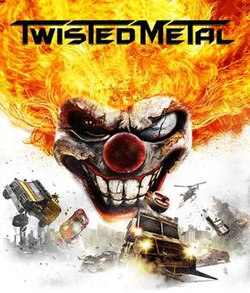 Twisted Metal on PlayStation
 Twisted Metal: Small Brawl on PlayStation
 Project Awakening on PS4
 Combat Elite: WWII Paratroopers on PS2
 Orphen: Scion of Sorcery on PS2
 Monster Hunter Stories 2: Wings of Ruin on Switch
 NFL Xtreme 2 on PlayStation












 Another SquareThought Site