

 Sep 2025
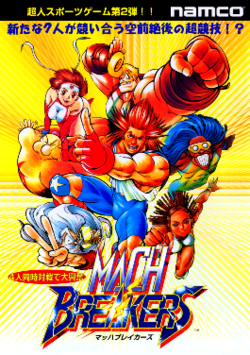

Mach Breakers: Numan Athletics 2 arrives on Nintendo Switch 2 as part of the Arcade Archives series, which is a polite way of saying: "We dug up an arcade cabinet, we dusted it, and now you can pay to relive it at home." Originally an arcade exclusive from Namco in 1995 running on NB-2 hardware and the direct sequel to 1993's Numan Athletics, Mach Breakers is exactly what it looks like-an over-the-top sports festival where the athletes are part superhero, part spice rack, and part exhibit in a small museum of odd character bios. The port keeps the arcade spirit intact: short, frantic events, ridiculous character bios (one competitor is inexplicably 194 years old and proud of it), and a ruleset that rewards twitch reflexes and the kind of button-mashing that will have you inspecting the warranty on your Joy-Cons.
At its core Mach Breakers is a five-day sprint of increasingly specific humiliation for both player and CPU. You pick from seven Numans-Masala T. Masala (India, born 1801, age 194; highest speed, lowest power), Johnny Sanders (USA, 1969, balanced), Makoto Kotobuki (Japan, 1975, age 19; high speed, low power), Sophia Rayleigh (UK, 1970; high speed, low power), Long Rui Huan (China, 1953; low speed, high power), Michael Fletcher (Jamaica, 1966; low speed, high power), and Karl Weisemann (Germany, 1957; lowest speed, highest power). Each one plays like a deliberately tuned arcade archetype-pick speed if you like running away from responsibility, pick power if you prefer to make things stop moving. Matches run across a roster of events that lean into spectacle rather than realism. The Hyper Glider event has starter lights shaped like Pac-Man, which is exactly the kind of cameo that makes you wonder whether the designers were taking notes from lunchroom fever dreams. Ground Spike lets you watch cracks deepen with Dig Dug characters laughing from the sidelines-an encouragement that may or may not be comforting. The five-day campaign includes three to four qualifying events on days two through four; if you fail to qualify, the arcade logic of "insert another coin" persists even here, translated into brutal checkpoints for your pride. If you play solo, the CPU fills the remaining roster with differently colored Numans; up to four players can compete simultaneously, which is a predictable amount of chaos when someone picks Karl and someone else picks Masala. The qualification mechanic is the game's gatekeeper. You can breeze through early events or spectacularly fail later ones-there's no middle ground, which is honestly refreshing. Every Numan also carries a unique ending sequence, which turns the completionist into a masochist; to see all endings you need to beat the game with all seven characters. It's a simple carrot, but it works if you enjoy short bursts of gameplay mixed with the emotional pain of repeated replays. The game is fast, often unfair in a way that feels nostalgic rather than malicious, and it rewards that rare combination of timing, pattern memorization, and optimism. Arcade Archives' port mostly plays like the original machine. Controls are tight in the way old arcades are-precise inputs buffered by hundreds of quarters-and the Switch 2 version preserves that rhythm. There's no modern training mode, no difficulty scaling outside of local player choice, and no hand-holding. If you like old-school arcade experiences that expect you to learn by failing, this is your kind of cruel. If you prefer a more forgiving modern sports game with post-game stats and avatars who talk to you about feelings, you will not find that here. The multiplayer remains the highlight: four humans elbowing for the same screen makes for some of the best passive-aggressive scoreboard trash talk the Switch 2 has witnessed.
On the visual front Mach Breakers wears its 1995 arcade DNA without apology. The sprites are chunky, colorful, and sometimes aggressively expressive-think teeth and muscles and hair physics that read like an artist had a good time drawing someone mid-sprint. Cameos from Namco's roster (Pac-Man starter lights, Prince Gilgamesh, Princess Ki, Valkyrie, Pitt and Patti, Hiromi Tengenji and Miyuki Chan running carnival stalls) are lovingly tacked onto the backgrounds, operating as in-jokes for people who collect Namco trivia the way others collect houseplants. The port does not attempt to upscale in a way that betrays the original art; instead it presents a faithful emulation with optional filters and a tidy scanline effect for authenticity. You can choose sharp pixels or cinematic museum filter, depending on whether you want your nostalgia crisp or salted. Audio is a small triumph. Composers Hiroto Sasaki and Nobuyoshi Sano provide a soundtrack that shifts between thrift-store techno and heroic fanfare in a manner that somehow suits both sprinting and embarrassment. SFX are satisfyingly arcade-button presses land with a thunk, explosions have the satisfying hollow quality of a cabinet speaker, and announcer prompts are delivered with the warm authority of someone who has literally narrated dozens of pixelated careers. The Switch 2's audio hardware renders this well; you'll hear everything you'd expect from a 1995 arcade, except perhaps the faint smell of cigarette smoke and the distant clink of coinage.
Mach Breakers: Numan Athletics 2 on Nintendo Switch 2 is not trying to be a modern sports simulator. It is trying to be a glorified arcade cabinet with personality, cameos, and unusual birthdates. The Arcade Archives port does precisely what it should: it preserves the original quirks, keeps the twitchy gameplay intact, and serves it up in a package that works perfectly for both short bursts and marathon attempts at unlocking every ending. The game's endurance is built on character variety, unforgiving qualifiers, and the odd joy of seeing a Pac-Man light blink at you like an old friend who knows all your bad decisions. If you grew up on arcades or enjoy tightly designed, fast, and frequently absurd competitions, Mach Breakers will feel like finding a dusty mixtape you forgot you owned-familiar and fun. If you expect modern conveniences like adjustable difficulty, online multiplayer, or a tutorial that holds your hand through the ethics of power vs. speed, you will be frustrated. On the strength of being a faithful, funny, and slightly bizarre arcade port with solid multiplayer and charming cameos, it earns a 7/10: a good time if you come for the nostalgia and stay because you've accidentally invested in Karl's ending.
 Arcade Archives 2: Ridge Racer on PS5
 Street Fighter V: Arcade Edition on PS4
 Oretachi Game Center Zoku: Nekketsu Koukou Dodge Ball Bu on PS2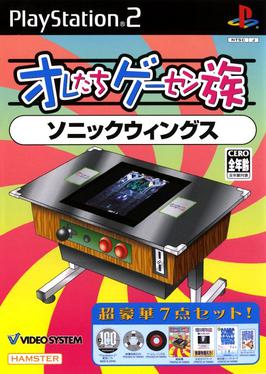
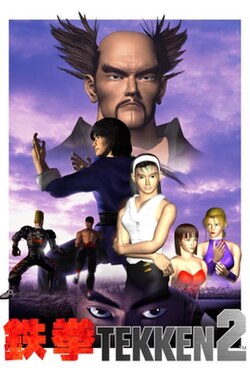
 Tekken 2 on PlayStation
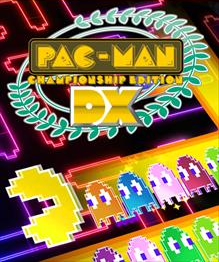
 Pac-Man Championship Edition DX+ on PS3
 R4: Ridge Racer Type 4 on PlayStation
 Tales of Arise on Xbox Series X/S
 Tekken on PlayStation










 Another SquareThought Site