

 Jun 2023
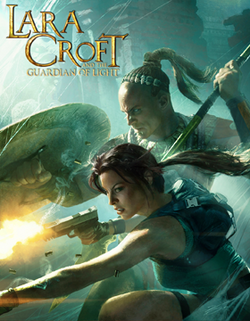

The Lara Croft Collection arrives on Switch as a tidy two-for-one of Crystal Dynamics' more experimental entries: Lara Croft and the Guardian of Light and its sequel Temple of Osiris. The collection is the console-friendly wrapper you'd expect for a decade-old download-only pair, but the star here is Guardian of Light - a deliberate detour from Tomb Raider's third-person, cinematic template into fixed‑camera, arcade-inspired co-op. What makes this port interesting from a technical perspective is not some flashy next-gen facelift, but the fact that Crystal Dynamics' Underworld-era engine - built for real-time lighting, physics toys and environment scale - has been recontextualized for an isometric twin-stick puzzle shooter on modern handheld hardware. If you care about collision fidelity, network co-op behavior, dynamic lighting and how game logic adapts when the AI partner vanishes, you're in the right review.
Guardian of Light is fundamentally a systems-first design. It runs on the same engine lineage as Tomb Raider: Underworld, but the perspective flips to a fixed isometric camera. That decision isn't just aesthetic: isometric framing reduces the camera-management surface area for both designers and players, which lets the team focus on interlocking mechanics - grappling hooks, spears-as-climb-points, timed bombs and physics objects - rather than cinematic camerawork. From a mechanical standpoint Lara and Totec are asymmetric agents. Lara keeps her dual pistols with infinite ammo and a grappling hook that doubles as both traversal tool and co-op crutch; Totec brings spears that can be used as environmental anchors and a shield that becomes a portable platform. These asymmetries are not cosmetic - they change the game's computational responsibilities. For example, the engine must reliably resolve a spear collision that can accept Lara's weight but not Totec's, while also handling Totec holding a shield above his head and Lara standing on it. That sounds trivial until you remember it's replicable both locally and online, with score attribution, pickup ownership and limited-resource contention (the finite number of enemies and gems is an intentional design to force competitive decisions).
Technically the original Guardian of Light punches above what you'd expect from a digital-only 2010 title. The Underworld tech brings real-time lighting, per-scene realistic shadows and physics-driven objects; vegetation reacts to player traversal and environments carry a convincing sense of scale. On Switch - where Feral Interactive handled the port - the graphical identity is preserved rather than reinvented. The isometric camera hides a lot of polycount limitations while making lighting treatments more readable: lightmaps and dynamic lights that might look noisy in a first‑person scene stay clean when viewed from a fixed angle. The game's lack of level load screens once a level begins is an underrated technical plus; streaming and memory management had to be handled carefully on original platforms and the Switch port benefits from that engineering. Audio is recycling-friendly: the soundtrack reuses cues from Legend, Anniversary and Underworld, which is a clever reuse of assets but also saves on storage and audio engine complexity. Where the port could be nitpicked is in modern expectations - no native 4K textures or modern postprocessing tricks - but that's a design choice as much as a technical limitation: the engine's strengths are lighting, physics interactions and readable isometric vistas, not texture fidelity.
The Lara Croft Collection on Switch is not a remaster that will blind you with graphical upgrades; it's a considered port that preserves the original's technical character and design philosophy. Guardian of Light remains a tidy example of engineering meeting playful design: asymmetric character systems, robust physics interactions, real-time lighting, and no-internal-load streaming combine to create a tight experience that scales well to handheld play. The multiplayer systems are worth a special mention: online co-op arrived post-launch on older platforms and the design choices - limited pick-ups, point attribution, and co-op puzzle hooks - make every session feel like a small engineering experiment in resource arbitration. The single-player adaptation is also intelligent: Lara receives additional tools and slightly different puzzles so the campaign doesn't hinge on flaky AI assistance, a smart production decision that reduces player frustration and engine-edge cases. If you want an 8‑10 hour arcade-ish action romp with smart level design and dependable technical underpinnings, this collection is a solid pickup on Switch. If your checklist is next-gen shaders, ultra-high-res textures or radically remastered audio, temper expectations. For players who care about how games are put together under the hood - collision logic, streaming, asymmetric co-op systems and lighting - The Lara Croft Collection is a pleasant reminder that tidy engineering can make classic design age gracefully.
 Street Fighter 30th Anniversary Collection on PS4
 Teenage Mutant Ninja Turtles: The Cowabunga Collection on Switch
 Vasara Collection on PS4
 Tintin: Destination Adventure on PlayStation
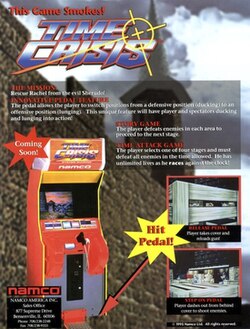
 Time Crisis on PlayStation
 Disney's Chicken Little: Ace in Action on PS2
 One Piece Grand Adventure on PS2










 Another SquareThought Site