

 Jul 2018
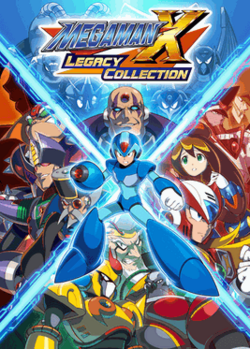

There is a particular cadence to revisiting a venerable series: the rapid-fire boss fights, the pixel-perfect ledge grabs, and the music that lodges itself in your head for decades. Mega Man X Legacy Collection 2 bundles the later chapter of Capcom's X saga-Mega Man X5 through X8-into a single package for modern systems, Xbox One included. This compilation expects its audience to remember the genre's conventions and still offers a degree of preservation and polish. It is not an exercise in wholesale restoration; it is a curator's attempt to make a flawed but historically significant run of games available without demanding that players dig out their old hardware. From a 1990s critic's vantage point the collection is something of an archival compromise. It contains the material fans want-playable ROMs, language options, behind-the-scenes art and trailers-alongside some judicious changes (and a few necessary concessions) intended to smooth the rougher edges of late-era X titles. The result is useful and occasionally brilliant, though never entirely immune to the design failings and tonal inconsistencies that haunted the originals.
Legacy Collection 2 assembles Mega Man X5, X6, X7 and X8. These games represent a transition period for the series: moving from 2D sprite-based action to hybrid and fully 3D experiments, and attempting to expand narrative scope while holding on to the shoot-and-slide fundamentals that made X famous. As presented here the games are emulated faithfully, with the usual modern conveniences where they make sense. You can swap between English and Japanese releases, and the collection restores certain elements fans will appreciate-most notably the Japanese voice tracks for X6 cutscenes that had been omitted from older compilations. Capcom has added features to temper difficulty spikes and modernize accessibility. A new "Rookie Hunter" mode halves incoming damage across the board; for X4 and later titles it even adjusts environmental lethality so bottomless pits don't always mean instant death. That is a sensible concession: X5-X6 in particular are notorious for brittle checkpoint design and punishing traps, so having a mode that reduces frustration helps the games survive in a modern playthrough. The first Legacy Collection introduced save states for X-X3; here the emphasis is less on save plumbing and more on giving players choice. The X Challenge mode is a welcome addition. Designed to pair Mavericks in tough two-on-one encounters, it distills the combat into concentrated bursts of boss-slaying intensity. Some encounters are exclusive to each volume of the overall Legacy Collection, which is an odd bit of marketing but offers replay value if you own both. The multimedia gallery is generous: concept art, original trailers, merchandise images and extras such as the Day of Sigma animated short. For players interested in series lore or design evolution, these materials enrich the package considerably. That said, the original games' problems are still present. X5 and X6 show their age in level design choices and balance; X7's attempt at 3D movement and mixed perspectives results in awkward camera work and imprecise platforming. X8 recovers somewhat, offering a cleaner approach and better production values, but the quartet as a whole can feel tonally inconsistent. The compilation also makes a few changes beyond mere quality-of-life fixes: the English names of certain X5 Maverick bosses-originally referencing Guns N' Roses-have been altered to match the Japanese meanings, and licensing issues necessitated replacing select music tracks from X6 and X7 in international releases. These alterations are understandable, though purists may bristle at hearing new compositions where familiar tracks once were.
Visual presentation in Legacy Collection 2 is a study in contrasts. The sprite work from X5 and X6 carries the worn sheen of late-era 2D art-detailed but occasionally busy, with character portraits and cutscene panels that read like anime storyboards. X7's jump into polygonal models betrays the period's 3D growing pains: stiff animations, awkward camera angles and level geometry that was not always kind to the series' precise movement demands. X8 shows the benefits of a later generation, with cleaner models, tighter lighting and better articulation, yet it still nods backward with sprite-like fidelity in certain assets. Capcom provides screen size and filtering options, allowing players to choose a more faithful pixel look or a smoothing filter if they dislike jagged edges on modern displays. The collection runs comfortably on Xbox One hardware; there are no technical horrors to report-no crippling frame drops or emulation stutters-and that is a relief. Restored Japanese voice tracks in X6 add production value to the cutscenes, though swapped music tracks in international releases sometimes feel out of place against the established audio aesthetic. Graphical adjustments are mostly conservative: the goal is preservation, not overhaul. Players hoping for full HD remasters will find instead a careful emulation job with optional presentation tweaks. For anyone who remembers the originals, the package looks right; for newcomers it reads as an artifact of its time with occasional moments of unexpected polish.
Mega Man X Legacy Collection 2 is not a perfect revival, nor is it an indifferent cash-in. It is a careful, occasionally compromised anthology that places the late X games within reach of contemporary audiences. The extras-the gallery, language options, Rookie Hunter difficulty and X Challenge-are well thought out and make the collection more than a simple dump of ROM images. At the same time, the inherent design flaws of X5-X7, the uneven transition to 3D, and music substitutions for licensing reasons prevent the package from achieving unequivocal classic status. For Xbox One owners and series fans, this collection is valuable: it preserves an important, if controversial, chapter of Mega Man history and wraps it in modern conveniences. Newcomers should be prepared for tonal whiplash and gameplay that occasionally betrays the limits of its era. Viewed through the lens of a 1990s critic assessing a present-day release, Legacy Collection 2 is a competent and occasionally insightful archive-recommended for collectors and devotees, cautiously suggested for the uninitiated.
 Mega Man: Dual Override on PS4
 Mega Man X Legacy Collection on Xbox One
 Disney's Chicken Little: Ace in Action on PS2
 Onimusha: Dawn of Dreams on PS2
 Tokyo Xanadu eX+ on PS4
 Action Man: Operation Extreme on PlayStation
 Monster Hunter Rise on Switch
 Resident Evil 2 on PS4
 Ultra Street Fighter IV on PS3
 Street Fighter 6 on PS4
 Resident Evil 7: Biohazard on PS4










 Another SquareThought Site