

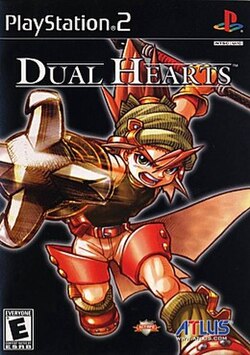

Dual Hearts is one of those early PlayStation 2 titles that looks at the new silicon and says, "Let's throw two worlds at it and see which one sticks." Developed by Matrix Software and released in 2002, it pairs a human treasure hunter (Rumble) with a dream-eating creature called a baku (Tumble) and uses that duo to scaffold a gameplay loop around swapping between the real world and dream realms. On paper the premise is cute and mechanically promising: mixed-reality traversal, dream-themed set pieces, and a roster of nightmare enemies. In practice the game sits firmly in the "competent with quirks" category - technically ambitious for its time, occasionally rough around the edges, and charming enough that you forgive it more often than you should. This review zeroes in on the technical plumbing that makes Dual Hearts tick: controls, camera, level architecture, systems integration (the dream/real transitions), performance characteristics, and how those elements shape the player's experience.
Dual Hearts builds its primary systems around a partner-based mechanic. Rumble is your avatar in the overworld - an adventurer who explores Sonno Island and triggers encounters - while Tumble is the baku with the ability to move between the waking world and dreamscapes. Mechanically the twist is simple but important: many puzzles and combat encounters are predicated on switching contexts. The game enforces this through level gating (dream orbs locked behind dream-only puzzles) and enemy encounters that learn to be threatening in one realm but trivial in the other. From a controls-and-input standpoint Dual Hearts follows the PS2-era action-adventure template: face buttons for attack and interact, shoulder buttons for context-sensitive actions, and an analog stick for movement. The responsiveness is generally solid; attacks have immediate animation starts and the input-to-action latency is minimal on original hardware, meaning hit detection feels fair. Where the title trips up is in precision platforming and long-range targeting. Camera-relative movement sometimes produces unexpected vector changes when strafing around tight obstacles, which makes longer precision jumps feel fiddly. The designers mitigate this by keeping most platforming sections short and by making many environmental puzzles about object manipulation rather than pixel-perfect leaps. Combat is an arcade-inflected mash of light combos, special moves tied to Tumble, and item usage. The enemy AI isn't especially deep - enemies generally fall into a few behavioral archetypes: patrol, charge, and range-spam - but the dream/real duality spices encounters up because some monsters only manifest in nightmares. This lets encounter designers play with visibility and threat density: crowded dream rooms can be visually busy while being mechanically straightforward, whereas the real-world fights are sparser but often force more tactical positioning. Progression is driven by exploration and orb collection, with an inventory system that feels intentionally lightweight. There are no convoluted stat trees; instead, power comes from unlocking new movement or dream-manipulation abilities that open previously inaccessible areas. This results in a Metroid-lite pacing where backtracking is encouraged but not punishing. Level design favors compact, interconnected hub areas rather than sprawling open worlds. This benefits performance - shorter draw distances and denser, purpose-built rooms - and suits the dual-realm mechanic, since transitions can be localized to discrete rooms without requiring streaming large swathes of content. The game's difficulty curve is balanced for accessibility; it's not a hardcore gauntlet, but some late puzzles do require you to think in both planes simultaneously, which can create satisfying "oh, of course" moments when the systems click.
Visually Dual Hearts is archetypal PS2: polygonal characters with modest triangle budgets, texture work that ranges from charmingly stylized to slightly blurry at distance, and particle effects used sparingly for dreamlike flairs. The art direction leans toward a whimsical fantasy palette that helps sell the dream environments even when the tech isn't pushing the console's absolute limits. Character models are well-proportioned for their era and rely on simple but effective silhouette readability - important for combat clarity. Technically, the engine prioritizes stable playback over flashy rendering. Lighting is mostly baked with localized dynamic highlights for key objects; full-screen dynamic lighting is not a major feature. Shadowing is limited and often represented with blob or projected shadows rather than per-polygon real-time shadows, which keeps GPU load down and maintains frame coherence. Particle systems are used for dream transitions and a few spell effects; they're small in number but cleverly timed to accent transitions between realms. Performance-wise Dual Hearts demonstrates the classic early PS2 trade-offs: a generally stable frame rate in most encounters, but occasional dips in crowded dream sequences where particle effects, enemies, and geometry combine. Texture streaming is handled conservatively, meaning pop-in is minimal in most areas; however, you'll notice texture blur on distant geometry and some aggressive mipmapping that softens fidelity at range. The draw distance is practical rather than impressive, with occlusion and fog used to mask geometry streaming and keep memory pressure reasonable. Animation quality is another highlight relative to budgets. Rumble and Tumble have a surprising number of contextual animations - transitional throws, grab animations, and dream-specific idle states - which give the pairing personality and aid in telegraphing actions during combat. Cutscenes use in-engine assets and avoid jarring jumps to pre-rendered cinematics; that keeps visual continuity but means story beats are presented through the game's runtime renderer rather than glossy movie sequences. Audio is functional and melodic, with credits to composers Tetsuo Ishikawa and Masala Nishid for a score that leans toward whimsical motifs designed to sit under exploration rather than dominate it.
Dual Hearts is an exercise in focused ambition: it takes a single hook - partner-based reality switching - and builds a compact adventure around it. The technical choices favor clarity and stability over ostentation, which fits the game's puzzle-forward design. If you care about crisp input response, readable combat choreography, and level layouts built with the mechanics in mind, Dual Hearts delivers. It doesn't match the production gloss of the PlayStation 2's blockbuster tentpoles, but neither does it feel like a half-baked experiment. The result is a middling-but-memorable action-adventure that critics pegged around the low- to mid-seventies (Metacritic ~70), and a 7/10 score feels appropriate: solid systems design and a few rough edges that hold it back from greatness. Recommendation time: pick this up if you're into era-authentic PS2 nostalgia, clean mechanical design, and a breezy single-player experience that rewards curiosity. If you want cutting-edge visuals or a rock-solid, modern camera system, this isn't your machine - but for what it sets out to do in 2002, Dual Hearts mostly hits its marks and does so with a smile.
 Kingdom Hearts HD 2.8 Final Chapter Prologue on PS4
 Vandal Hearts on PlayStation
 Tintin: Destination Adventure on PlayStation
 Disney's Chicken Little: Ace in Action on PS2
 One Piece Grand Adventure on PS2
 Taiko no Tatsujin: Dokodon! Mystery Adventure on Switch
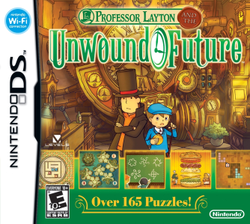
 Professor Layton and the Unwound Future on DS
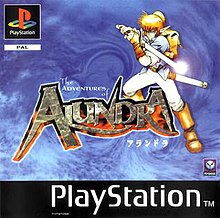
 Alundra on PlayStation
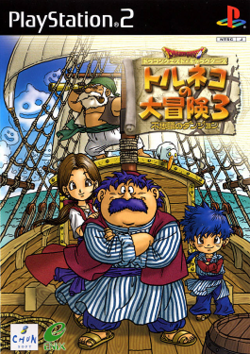
 Dragon Quest Characters: Torneko no Daiboiken 3 – Fushigi no Dungeon on PS2
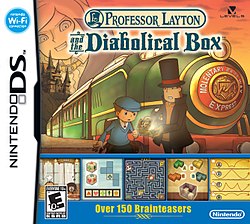
 Professor Layton and the Diabolical Box on DS
 Nectaris: Military Madness on PlayStation












 Another SquareThought Site