

 Dec 2016
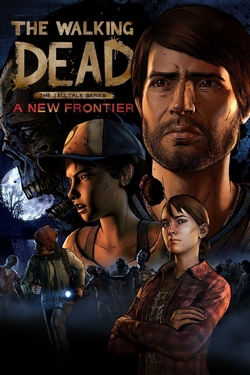

Telltale's third major entry in The Walking Dead series, officially subtitled A New Frontier but commonly referred to as Season Three, is the studio's attempt to reboot the formula with a fresh lead, an updated engine, and a heavier focus on branching narrative plumbing. On PS4 the result behaves like a well-dressed but slightly creaky stage actor: charismatic, emotionally manipulative when it needs to be, and occasionally tripping over its own lines. If you came for high-octane action, you will be disappointed; if you came for tight technical systems, you will still find a lot to pick apart - in a good way and in a 'please-patch-this' way. This review dives into the mechanical nuts and bolts: how the game is built, how decisions are tracked and imported, how it runs on console hardware, and where Telltale's design concessions show through.
A New Frontier remains a point-and-click graphic adventure at heart, but its technical scaffolding has been tweaked. The input model on PS4 maps traditional point-and-click interactions onto a controller-friendly interface: context-sensitive prompts, radial-style interaction wheels in some scenes, and face-button confirmations for picking up items or initiating conversations. Conversation trees retain the franchise's signature short-timer decision windows; these time-limited choices are still the primary method Telltale uses to pressure the player into personality-defining decisions. The design choice to keep the windows short is deliberate: it trades deliberative role-playing for snap moral signaling. That makes the system great for drama but blunt for nuance. Mechanically the season introduces two playable characters - Javier and Clementine - and the engine schedules frequent character swaps to vary perspective. From a systems perspective, this is a reasonable way to hide the thinness of exploration: by switching POV the team can reuse scene geometry and NPC sets while presenting them as fresh through narrative context. It also forces the dialogue system and state machine to handle more concurrent variables: not only must the game remember which NPCs live or die, but which protagonist witnessed which beats. Telltale's decision graph here is larger than previous seasons, and that complexity shows up in a few interesting ways. The save-import system received a notable technical overhaul. Recognizing that many players had migrated platforms (or never played earlier seasons on current hardware), Telltale implemented a server-backed import path and a local 'story generator' tool. The generator is especially clever: the team analyzed roughly 40,000 playthroughs across Season 1 and 2, abstracted common behavioral archetypes, and distilled those into 42 distinct starting scenarios. Rather than forcing players to remember tiny choice details, the tool asks broad-behavior questions and maps answers onto an approximated save state. It's an elegant engineering solution to cross-platform continuity and an interesting case study in using telemetry to design UX tooling. Action scenes still rely on quick-time events (QTEs) and time-pressured decisions. On PS4 these are responsive overall, but the Telltale Tool's handling of input buffering can feel inconsistent: a perfectly timed button press sometimes gets rejected if an animation lock-step hasn't reached the expected frame. In practice this means QTEs are less a test of reflexes and more a test of whether the internal animation state machine is happy at that moment. Failure results in a checkpoint reload - the familiar and mostly unobjectionable consequence - but occasional mismatches between visual prompt and accepted input add friction. Branching narrative is implemented in the usual Telltale fashion: choices are binary or ternary nodes that toggle flags, which later scenes query. The consequence system is intentionally coarse-grained: choices alter NPC dispositions, who will appear later, and a few large plot beats. The engine masses many micro-choices into representative flags, which reduces combinatorial explosion but also leads to the criticism that some past decisions from Season Two felt deprioritized or overwritten. From a technical design standpoint, this is a common trade-off - maintainable branching graphs vs. truly persistent micro-variants - and Telltale leans towards the former to keep production feasible. Episodic structure (five episodes) has both production and mechanical impacts. Each episode contains contained decision graphs with inter-episode state merges; these merges explain why some episodes feel short - they're engineered as narrative 'lanes' meant to funnel into later merges. Short episode runtime was a frequent critique on release, and the technical reason is clear: with more branching nodes and two protagonists, the team split content into tighter, higher-density episodes to hit release cadence and resource constraints. The result is compact, high-impact scenes that sometimes sacrifice connective tissue. Finally, platform-specific logistics matter: PS3 and Xbox 360 versions were canceled shortly before launch, which created a need for the aforementioned server-side save import and the 42-point story generator. That cancellation was a blow to cross-gen continuity but the technical workaround was a solid - if imperfect - fix that prevented many players from losing narrative history when they upgraded consoles.
Visually A New Frontier is a refinement rather than a revolution. It runs on an updated iteration of the Telltale Tool and the style leans even harder into the comic-book-derived cel-shaded aesthetic that defines the series. On PS4 this manifests as cleaner character silhouettes, improved normal-mapped detail on clothing, and dynamic lighting that helps sell depth in what are sometimes otherwise low-poly environments. Facial rigs are more expressive than in earlier seasons: the animation pipeline includes more targeted blendshapes and better lip-sync curves, which makes emotional beats land more reliably. Despite improvements, engine artifacts from prior Telltale builds remain. Players will occasionally encounter clipping, shadow pop-in, and face animation transitions that snap rather than interpolate. The camera system is intentionally cinematic - fixed angles and slow dolly moves - which helps direction but can highlight low-resolution textures when you linger. Performance on PS4 is generally stable, though several reviewers noted a dip in perceived polish mid-season; Metacritic scores for PS4 episodes trend downward around episodes 3 and 4, suggesting uneven patching or rushed mid-production changes. Audio design is a bright spot: Jared Emerson-Johnson's score is well mixed, and the voice cast is solid, so sound masks a surprising amount of visual inconsistency. From a technical art standpoint, the biggest win is how well the engine maintains readable silhouettes and expression under constrained budgets. That clarity matters more than polygon counts in a dialogue-driven adventure, and here Telltale still gets it right more often than not.
A New Frontier is more interesting as an exercise in narrative engineering than as a flawless interactive drama. On PS4 the upgraded Telltale Tool brings better facial performance, crisper lighting, and a genuinely useful save-import system that uses player-telemetry to seed a multi-option backstory generator. The game's mechanical DNA - time-limited dialogue, QTEs, and coarse-grained branching - remains the same, which will delight fans wanting continuity and frustrate players hoping for more mechanical depth. Episodic pacing and shorter episode runtimes are the clearest production compromises: scenes hit hard and fast, but occasionally feel underdeveloped between plot beats. If you value tight narrative direction, strong voice work, and an accessible cross-platform continuity solution, Season Three on PS4 is worth your time. If you demand robust branching where every small decision ripples distinctly through the story, the game's synthesis approach won't satisfy. Score-wise it sits comfortably in the 'good but imperfect' neighborhood: a technical step forward in several areas, hamstrung by longstanding engine quirks and the inevitable constraints of episodic production. It's a flawed masterpiece for people who like emotionally charged storytelling packaged with a few engineering lessons baked into the loading screens.
 Warriors Orochi 3 on PS3
 The Walking Dead: Michonne on PS4
 Ultimate Marvel vs. Capcom 3 on PS3
 Tintin: Destination Adventure on PlayStation
 One Piece Grand Adventure on PS2
 Taiko no Tatsujin: Dokodon! Mystery Adventure on Switch
 Taiko no Tatsujin: Don to Katsu no Jikū Daibōken on Switch
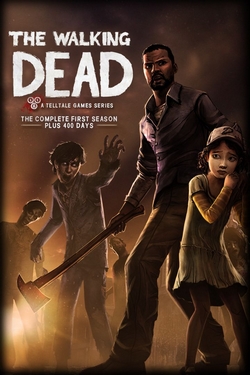 The Walking Dead on PS3
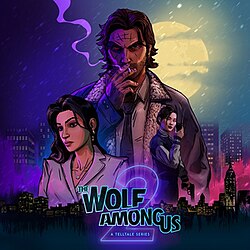
 The Wolf Among Us 2 on PS5
 The Wolf Among Us 2 on Xbox Series X/S
 Sam & Max Save the World Remastered on PS4
 The Walking Dead: Season Two on PS4










 Another SquareThought Site