

 May 2014
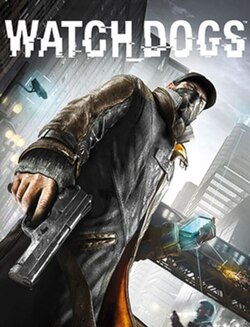

In an era that thought 'next-gen' was the sort of thing you announced with cinematic trailers and impromptu conspiracy theories, Watch Dogs swaggered onto the scene promising to turn the entire city into a controller. Developed by Ubisoft Montreal and released in 2014 for the PlayStation 4 (among other platforms), it casts you as Aiden Pearce, a somber grey-hat hacker with a very practical trench coat and a personal grudge against anyone who will listen. The game's premise-ctOS, a central operating system knitting Chicago's infrastructure together like a particularly invasive sweater-had the gaming press salivating in the way seniors salivate over a well-indexed strategy guide. That expectation is central to judging whether the final product lives up to its own marketing bravado. I write this from the vantage of a reviewer who cut his teeth in the 1990s: we measured innovation in bold ideas and floppy-disk-sized risks. Watch Dogs is a big-idea game, by modern standards and by the impatient standards of my youth. It is confident, sometimes overreaching, and intermittently brilliant. It is also, disappointingly, human: full of compromises and the occasional mid-development cough that leaves the player aware there was once a grander plan in the brochure.
At the heart of Watch Dogs is a deceptively simple conceit: a smartphone is your Swiss Army knife, and Chicago is a very large, very hackable picnic. From a third-person viewpoint you will walk, climb, crouch and drive through a city divided into six distinct regions-Parker Square, the Loop, Brandon Docks, the Wards, Mad Mile and Pawnee-each one a patchwork of references to the real Windy City but free to bend geography for gameplay. The Disrupt engine simulates traffic patterns, pedestrians and the weather cycle, and the result is an urban playground that responds to your fiddling in ways most open worlds only dream about. The gameplay loop marries stealth, shooting and a novel hacking toolkit. The latter is the game's headline act: you can switch traffic lights, stop trains, tap into private phone records, empty bank accounts and generally make the city behave like a Rube Goldberg machine written by a bored network admin. Hacking is often resolved through small puzzles-throwaway nods to PipeMania-yet the mechanical simplicity is a virtue: Ubisoft studied Grand Theft Auto and Saints Row to reduce complexity and keep the flow intact. Combat benefits from that flow. A robust cover system supports both stealth approaches and full-scale firefights, with options for slow-motion gunplay if the player fancies themselves an action-movie protagonist. Aiden's toolkit extends beyond the typical shooter fare. He scales forklifts and aerial work platforms, uses a telescoping truncheon in melee, and calls upon a suite of explosives, IEDs and electronic decoys. Vehicles are plentiful and varied-motorcycles, muscle cars, SUVs and the occasional speedboat-and driving feels slick; the PS4 hardware allows for better physics and AI, making pursuits less predictable than a scripted chase scene. Reputation is an odd but welcome earned currency: do good and citizens may turn a blind eye when you lift a vehicle; act like a villain and the city will treat you accordingly. A skill tree rewards hacking, combat, driving and crafted gadgets, giving you choices about how Pearl of Revenge spends her ill-gotten hours. Multiplayer is stitched into the single-player fabric in a way that was novel for the time. Up to eight players may share the city, invading each other's games for cat-and-mouse hacking duels or cooperating on contracts. The invasion mechanic is elegant: other players appear to you as unremarkable NPCs until they reveal themselves, which creates tense moments of paranoia worthy of a 1990s espionage serial. For those who like their games with fewer surprises, invasions may be disabled at the cost of resetting your multiplayer rank-a tidy compromise. The campaign follows Aiden's revenge narrative after a botched heist leads to the death of his niece. The plotting is serviceable, occasionally melodramatic, and populated with better supporting characters than the lead deserves. Raymond "T-Bone" Kenney is a memorable foil; Clara and others give the proceedings color. Yet the story rarely achieves the moral gravity implied by a city suffocated by surveillance. The game is at its best when mechanics and missions dovetail-when a heist is both a puzzle and an action set-piece-and less persuasive when it leans on revenge clichés. The Bad Blood expansion, which follows Kenney a year later, is a neat supplementary chapter with tight missions and the novelty of an RC car, and it demonstrates that the engine can carry smaller, sharper narratives as well.
Graphically, Watch Dogs occupies an awkward place in the modern museum. The E3 2012 demos invoked jaw-dropping visuals and a next-gen sheen that many players assumed would be delivered verbatim. The final PS4 product is handsome-city reflections, wind in the trees, and detailed NPC behaviour are all present-but it also carries the whisper of 'downgrade' that followed pre-release comparisons. Character models are serviceable but occasionally flat; facial animation can be less convincing than the luxuriant rain-slick streets. On the plus side, the PlayStation 4's additional power is apparent in better physics for water and wind, and in AI that feels more responsive than the last-generation ports. The sound design and score merit applause. Brian Reitzell's krautrock-infused compositions give the game a pulsing, slightly melancholy undertone that suits late-night hacking excursions and high-speed chases alike. Ambient traffic, radio chatter and the satisfyingly electronic twang of a successful hack elevate immersion. There are technical hiccups-some players reported stability issues and occasional bugs at launch-but on a pure sensory level the PS4 release is an evocative urban sim that more often delights than disappoints.
Watch Dogs is a bold experiment that mostly works. Ubisoft Montreal took five years, a budget in the tens of millions and a thousand-strong army of developers to deliver a game that rewired the open-world formula around hacking. The result is a playable, often inventive title that rewards curiosity and cleverness: set pieces hum when you choose to manipulate the city itself. Criticisms are real-there's a dissonance between early marketing and retail visuals, the main character is underwritten, and the narrative never quite grapples with the ethical meat on its bones-but none of these flaws fatally undermines the experience. Commercial success followed critical ambivalence; Watch Dogs sold millions and sparked sequels and transmedia ambitions, which says something about both its ambition and appeal. If you own a PS4 and fancy a game that makes you feel like a networked puppet-master rather than just another trigger-happy open-world vandal, Watch Dogs is worth your time. It is not flawless, but it is frequently clever, occasionally profound and reliably entertaining. Score: 8 out of 10-an elegant, imperfect machine with more good ideas than it has time to fully explore, the sort of game remembered by its moments more than its monologues.
 Watch Dogs 2 on PS4
 Watch Dogs: Legion on PS5
 Tintin: Destination Adventure on PlayStation
 Disney's Chicken Little: Ace in Action on PS2
 One Piece Grand Adventure on PS2
 Taiko no Tatsujin: Dokodon! Mystery Adventure on Switch
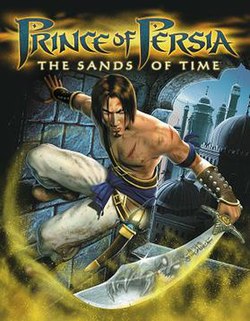
 Prince of Persia: The Sands of Time on PS3
 Assassin's Creed: Brotherhood on PS3
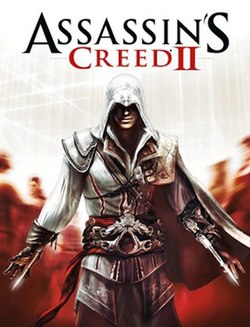
 Assassin's Creed II on PS3
 Far Cry 3 Classic on PS4
 Assassin's Creed: Origins on PS4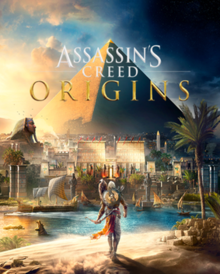










 Another SquareThought Site