

 Jan 2027

Tomb Raider: Catalyst arrives like a postcard from a very fancy, slightly dangerous holiday: Northern India, ancient ruins popping up like bad plot twists after a mythical cataclysm, and Lara Croft, older, hollower-eyed and apparently still very interested in things that explode when you poke them. Developed by Crystal Dynamics and published by Amazon Game Studios for PS5, Catalyst is billed as the largest Tomb Raider yet and promises to sew together the knotted timelines of the franchise - yes, that includes bringing elements of the 2013-2018 reboot trilogy into a continuity that also follows on from Underworld (2008). It's a curious creative tightrope: respect nostalgia for the older canon while not alienating players who met Lara in cargo pants and trauma. The move to Unreal Engine 5 and the casting of Alix Wilton Regan as Lara (succeeding Camilla Luddington) underline the intention: emotional depth, visual spectacle, and a version of Lara who is witty enough to land a quip while hefting a 2,000-year-old artefact. Catalyst's premise is refreshingly straightforward: a cataclysm wakes the guardians of newly exposed ruins, rival treasure hunters show up with varying degrees of moral hygiene, and Lara has to decide who to trust while preventing another catastrophe. For a series that has often been about levers, spikes and emoji-level puzzle designs, this instalment is leaning hard into the narrative. That is music to the ears of anyone who secretly plays Tomb Raider for the melodrama and the way Lara's internal life clatters against an exterior of grit and parkour.
If you're expecting a by-the-numbers reboot with a handful of tombs and a side of boulder-chase, Catalyst looks like it wants to be better behaved - and more complicated - than that. The document is coy on mechanical specifics, but the world design and story framing tell us a lot about what the gameplay will be used to do narratively. The setting in Northern India, described by the studio as a "fan-favourite location" and the largest Tomb Raider yet, hints at expansive environments where exploration is not just a gameplay loop but a narrative engine: we can expect ruins that function as memory palaces for Lara's past, each tomb a miniature arc that reflects an emotional beat in her journey. The game's single-player focus and the competitive presence of rival treasure hunters sets up a series of character-driven encounters rather than anonymous goon-swarm firefights. These rivals are not props; their desire to exploit the ancient site's power positions them as mirrors and foils for Lara. In-game sequences that revolve around whether to trust or bar a rival from access to a ruin could translate to branching dialog, stealthy skirmishes where persuasion is an option, or timed races where moral decisions have tangible mechanical consequences. It's also where Lara's arc becomes gameplay: her choices about trust will redefine how certain areas are approached, which relics are secured, and potentially which catastrophes are averted. Lara herself is being recast by Crystal Dynamics not as a reborn ingénue but as a protagonist whose origin (the reboot trilogy) has been folded into a longer life that includes the older canon. That provides ripe material for evolution in the player's hands. A Lara who begins the game anchored in an origin story can slowly shed youthful doubt and become the measured, self-aware adventurer of later instalments. Expect traversal and puzzle design to mirror that maturation: early sections might privilege raw physical improvisation and risk, while later tombs demand inference, restraint and ethical judgement. Alix Wilton Regan's casting - praised by Scot Amos for wit, charm, charisma, confidence and emotional depth - suggests that the performance layer will be crucial in selling these transitions. Small gameplay scaffolds like companion interactions, flashback sequences, or artefact-driven visions can give those moments weight. There's also the metaphoric role of the "forces guarding" the ruins. If done well, these guardians will not be mere bullet-sponge bosses but thematic antagonists: manifestations of hubris, cultural erasure, and the consequences of tampering with ancient power. Confronting them should feel less like a health-bar reduction and more like a conversation about preservation versus exploitation - with Lara ideally learning, and sometimes failing, in ways that complicate her moral posture. Crystal Dynamics' single leadership team across Catalyst and Legacy of Atlantis hints at careful narrative continuity, which may allow side quests and relic hunts to pay off emotionally rather than just mechanically. On the flip side, the game must thread a needle: accessible for newcomers while meaningful for long-time fans. If Catalyst ties too many mechanical toys to franchise lore, it risks punishing new players. The best-case scenario is systems that teach themselves through story: a newcomer learns Lara through her choices and skills as they become necessary, while veterans get the satisfaction of seeing long-term narrative consequences unfold.
Built on Unreal Engine 5 for the PS5, Catalyst's technical pedigree promises big vistas and detailed ruins that do more than look pretty; they should feel lived-in. Northern India offers a palette of dense jungle, monsoon-weathered stonework and bright market towns that can make the engine sing: dynamic lighting for the cataclysm-wracked skies, particulate atmospherics in crumbling chambers, and detailed character animation to sell the emotional beats of Lara's conversations. The claim that this is the "largest Tomb Raider" Crystal Dynamics has made is more than a marketing number - it raises expectations for environmental storytelling. Textures and foliage density will matter when you're clambering up a temple face and replaying, in your head, the voice line that just reframed a villain's motivation. Alix Wilton Regan's performance will be given a more convincing visual partner if the PS5 hardware is used for nuanced facial capture and cloth physics during a chase. The trick is to avoid set-piece flash without grounding: polished lighting and shiny rocks are useless if they don't enhance the narrative beats that matter, such as the moment Lara recognises a rival's desperation or when an ancient guardian seems less monstrous and more tragic. Unreal Engine 5's capabilities mean the game can build those quieter moments into its visual grammar, turning jaw-dropping vistas into context for character growth rather than mere postcards.
Tomb Raider: Catalyst is shaping up as an ambitious attempt to balance spectacle with a character-first drama. Its promise is not just bigger tombs and prettier explosions, but a version of Lara whose journey stitches together the franchise's messy family tree into something coherent and emotionally rewarding. The cast and development choices suggest Crystal Dynamics wants to make Lara witty, confident and more emotionally layered; the presence of rival treasure hunters and guardian forces gives the game avenues to probe trust, responsibility and the ethics of antiquity-hunting. There are risks: trying to satisfy both newcomers and long-term fans can muddy stakes, and an emphasis on narrative could be undermined if gameplay systems don't carry the same thematic weight. Still, the foundations are solid - a focused single-player campaign, Unreal Engine 5 on PS5, and a creative leadership that is conscious of continuity. If Catalyst delivers on its narrative promises, it will be a Tomb Raider that asks you to care about the artefacts and the people around them, not just the gratifying crunch when an ancient mechanism finally yields. That feels like a worthy evolution for a series that has always been part Indiana Jones, part personal memoir. Score: 8/10 - for ambition, potential and a heroine who looks ready to stop raiding tombs and start reckoning with them.
 The Tomb Raider Trilogy on PS3
 Tomb Raider on PS3
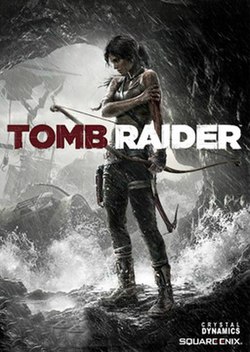 Tomb Raider on PlayStation
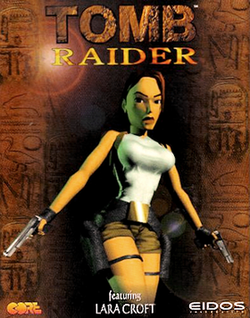 Tintin: Destination Adventure on PlayStation
 Disney's Chicken Little: Ace in Action on PS2
 One Piece Grand Adventure on PS2
 Taiko no Tatsujin: Dokodon! Mystery Adventure on Switch
 Tomb Raider: Legacy of Atlantis on PS5
 Rise of the Tomb Raider on PS4
 Tomb Raider: Definitive Edition on Switch
 Tomb Raider on PS4









 Another SquareThought Site