

 Oct 2025
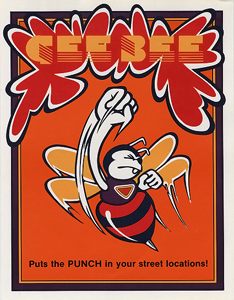

If you've ever wanted a workout for your thumbs and your patience, Arcade Archives 2: Gee Bee arrives like an old-school gym instructor yelling encouragement from a rotary dial. This 1978 Namco oddity-part Breakout, part video pinball and all retro charm-lands on Nintendo Switch 2 via the Arcade Archives line. It's tiny, unforgiving, and blessedly honest: the aim is simple (deflect a ball and score points), but the road to mastery is paved with lots of tiny, humiliating losses and a learning curve that rewards calm hands and sharp prediction. Gee Bee is best appreciated not as a nostalgia cash-in but as a minimalist skill test. The game pairs the arcade-era obsession with high scores and a physical-feel control scheme: you rotate to position paddles, catch a ball, ricochet it into bricks, hit bumpers and spin objects, and manage multipliers by rolling over NAMCO (or Gremlin) targets. The result is a compact engine of challenge-no power-ups, no tutorials, just you, a digital ball, and the consequences of every tiny miscalculation.
Under the hood, Gee Bee looks like a face made of game parts and plays like a hypnotic metronome of reflexes. The player uses a rotary dial to move an on-screen set of paddles; you don't mash a button and pray, you turn, you feel the angle, you set up rebounds. That's important because the mechanic forces you to think in arcs and vectors instead of binary left/right panic. The core loop-launch, juggle, aim, score-is tiny but dense. Bricks are Breakout-style targets, pop bumpers dole out ten points apiece and spinners slow the ball, which is both a blessing and a trap depending on how comfortable you are with a decelerating orb. Challenge in Gee Bee arrives from a handful of elegantly brutal design choices. First, the ball physics and the dial control demand precision. Success isn't about frantic flailing; it's about micro-adjustments and timing. You'll quickly learn that the difference between a safe rebound and a catastrophic drain is a fraction of a rotation. That trains fine motor control and deliberate timing in a way modern twin-stick shooters don't bother with. Second, zone awareness matters. The board is deliberately compact with a cluster of scoring opportunities-brick formations, pop bumpers in tight arrangements, and the NAMCO rollovers that increase your score multiplier when all lit. High scores require planning: do you try to light the rollovers early for a multiplier boost and risk losing the ball while you set up, or do you clear bricks to open safer channels first? The optimal path depends on your comfort with risk management and reading the ball's likely ricochet paths. Third, speed and momentum are a skill to master. Spinners purposely slow the ball which changes the rhythm of play; a slow ball demands patience (and can be harder to predict if it starts wobbling around bumpers), while a fast ball punishes indecision. Part of the challenge is becoming an expert at tempo control-intentionally hitting or avoiding spinners and bumpers to keep the ball at a tempo you can manage. Fourth, randomness is low but meaningful. Unlike modern games that lean on flashy RNG, Gee Bee gives you mostly deterministic physics; what randomness exists (small deviations in bounce or timing) becomes a test of adaptability. When things go off-script, the best players react quicker, repositioning paddles and anticipating the new trajectory rather than hoping for a lucky bounce. That hones predictive spatial reasoning: you don't just react to where the ball is, you play where it will be. If you're playing multiplayer (the arcade original supported it), the challenge gets social and psychological. Competing for high scores means watching the other player's approach, stealing sightlines to the top targets, and sometimes deliberately sabotaging a rhythm by forcing faster ball speeds. Multiplayer in Gee Bee isn't about flashy combos; it's a duel of composure. Skills you'll sharpen while you grind out credits: hand-eye coordination (obvious but nonnegotiable), timing and rhythm (the game is essentially a percussive instrument), spatial prediction (learning ricochet geometry), risk/reward decision-making (when to go for multipliers vs safe clears), and patience (the slow-burn technique often wins). There's also a subtle meta-skill: recognizing patterns in your own mistakes. Once you stop blaming "bad luck" and start tracking the one paddle position that always gets you, real improvement happens. Arcade Archives' emulation on Switch 2 preserves these mechanics faithfully. The control adapts to modern inputs-use a dial-mapped stick or gyro if you prefer-but the soul of the original is intact: tiny playfield, strict rules, and a severe yet fair test of skill. If you're the kind of player who likes learning the phrase "I could've had it" in every tone possible, Gee Bee will be your therapist.
Graphically, Gee Bee is charmingly sparse. The original used strips of cellophane over the monitor to fake color, and the playfield's arrangement even resembles a human face. On Switch 2, Arcade Archives dresses the game in a neat emulation wrapper: the crude sprites, simple shapes and blocky text are presented without modern polish, which is exactly what the medicine calls for. The visuals aren't about spectacle; they're functional signposts-bumpers, spinners and rollovers are clear, and the simplicity helps you focus on the math of rebounds instead of being distracted by particle effects. Because the game is old, don't expect mouth-watering visuals. The appeal is retro fidelity. If you enjoy reading the trajectory of a pixel ball and interpreting minimalist indicators like a detective reading a crime scene, you'll appreciate how the visuals put gameplay first. For everyone else, the graphics are a stylistic history lesson in what arcade economy looked like in 1978.
Arcade Archives 2: Gee Bee is not trying to be your new favorite spectacle; it's aiming at your skill bucket. It's an austere, focused challenge that rewards calm control, spatial thinking and a willingness to learn tiny mechanical truths about how a ball bounces. At times the game feels like being given a math problem with a joystick, and sometimes that's exactly what you need. Score-wise it's a solid 7.5/10: not perfect, and no one will call it flashy, but if you want a short, satisfying, somewhat infuriating classroom in old-school arcade skills-deliberate aim, tempo control, risk management-Gee Bee is a rod-to-the-reflexes you'll come back to. If you buy Arcade Archives for blockbuster remasters, Gee Bee will be the odd, slightly stubborn exhibit in the museum that makes you appreciate how much modern games borrow from these compact lessons. If you buy it for the challenge, you'll find a small, ruthless tutor that's equal parts unfair nostalgia and pure, distilled practice. Respect it, rotate the dial, and maybe-just maybe-you'll finally beat your last embarrassing high-score.
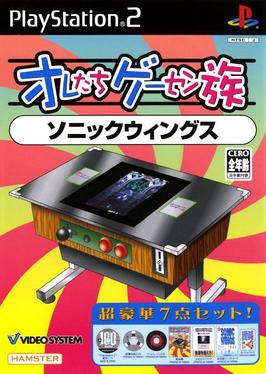 Arcade Archives 2: Ridge Racer on PS5
 Street Fighter V: Arcade Edition on PS4
 Oretachi Game Center Zoku: Nekketsu Koukou Dodge Ball Bu on PS2
 Mr. Driller Drill Land on Switch
 MouseCraft on Switch
 Crawlco Block Knockers on Switch
 TerraTech on Switch
 Tekken 2 on PlayStation
 Pac-Man Championship Edition DX+ on PS3
 R4: Ridge Racer Type 4 on PlayStation
 Tales of Arise on Xbox Series X/S
 Tekken on PlayStation










 Another SquareThought Site