

 Mar 2026
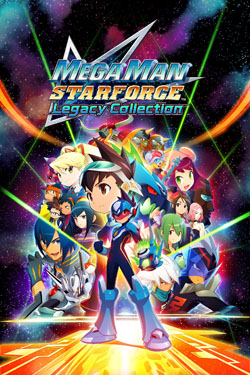

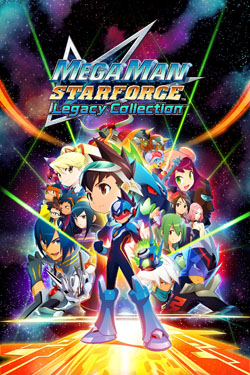
Mega Man Star Force Legacy Collection lands on PS5 as the modern shrine to a DS-era oddball: three Mega Man Star Force games, delivered as seven original versions, wrapped in a present-day feature set. Capcom's menu of technical decisions here reads like a spreadsheet made by someone who loves old cartridges but also needs stable frame-pacing. The compilation is built on Capcom's RE Engine and aims to reconcile the dual-screen DNA of the originals with single-screen TVs and controllers that never knew what a stylus was. If you care about exact emulation choices, audio fidelity, networking quirks, and the trade-offs between authenticity and modern QoL (quality-of-life) additions, this is the collection that will make you nitpick in public.
At the heart of the Legacy Collection is a portability problem: these were DS games designed around two screens and a stylus. The collection's technical approach is pragmatic. It adapts dual-screen layouts into a single-screen format with options for how the two screens are arranged and an optional smoothing filter. This is not a cosmetic afterthought - layout choices affect visual fidelity and perceived input clarity, because UI elements that were once off-screen or held by the touchscreen now sit alongside action windows where pixel density and scaling matter. Gameplay-wise, each of the three main Star Force titles - Pegasus/Leo/Dragon, Zerker × Ninja/Zerker × Saurian, Black Ace/Red Joker - are present in their original variants for a total of seven disc-less cartridges. That fidelity to release history is a collector's win: version-specific chips, event content, and card availability are preserved. The compilation includes bonus cards once locked behind physical events and toys, and even reinstates a Konami crossover that was cut from the English release of the first game. For players concerned about the integrity of original mechanics, this is closer to archival than reimagining. Capcom added modern assistants that matter in a technical sense: a new auto-save routine, adjustable enemy encounter rates, new difficulty toggles, and combat multipliers that scale Mega Man's defense and damage. These feel like intended developer-level patches rather than crude trainer cheats - they change the play loop without rewriting combat parameters. From a systems design view, offering encounter rate sliders is particularly useful: it allows you to trade CPU time spent on repetitive random battles for longer, more meaningful encounters, which is a small but effective QoL lever for modern players. Multiplayer and online systems are present but conservative. You can trade cards online and duel opponents in ranked or casual matches, and the friends system supports up to 100 registrations using the series' Brother Band metaphor. Capcom did not enable cross-platform play, so PS5 players are fenced off from Switch, PC, and Xbox users. Practically speaking, this limits matchmaking pools and affects latency expectations - on PS5 you mostly match other PS5 owners, which in turn affects ranked matchmaking stability and the likelihood of finding casual partners late at night. The collection also offers an offline-friendly art gallery and music player, and lets you toggle between original OSTs and new re-arrangements (all tracks get a new arrangement option), which is notable because switching audio streams on the fly has implications for streaming, compression, and memory usage on next-gen hardware.
The RE Engine label in the credit block is the most eyebrow-raising technical detail. RE Engine is Capcom's modern workhorse for high-fidelity titles, but here it's being used to present 2D DS-era assets and UI on modern displays. That seems odd until you consider the advantages: a consistent rendering pipeline, built-in upscaling/temporal anti-aliasing options, and robust controller and input layers that make adapting touch-focused mechanics smoother. The smoothing filter option mentioned in the menu ties directly into that pipeline - it performs a post-process pass to reduce blockiness without fully softening pixel art into mush. For purists there's also an option to keep the original pixel grid intact. On PS5, the compilation focuses on stable frame pacing and clean scaling rather than flashy rework. Sprite work and backgrounds remain faithful, so the 'upgrade' is about presentation rather than remastering sprites into 3D. New voiceovers in both Japanese and English are integrated with the in-game dialogue, and you can play either the original or rearranged music while exploring menus; toggling between audio versions in real time is handled without stutter, which speaks well of the audio streaming and asset management under the hood. That said, reviewers noted the PS5 version received mixed reviews compared to Switch and PC, suggesting platform-specific polish differed - likely in UI scaling, platform-specific QA, or matchmaking edge cases rather than core gameplay fidelity. Resolution and performance are handled sensibly: you're not getting a native 4K re-render of DS assets, but the RE Engine pipeline ensures reasonable upscaling and a clean full-screen experience. The menu system features an interactive Mega Man navigator that reacts to choices; while this is a UX flourish, it's an easy test for input latency and event-driven animations - they perform smoothly on PS5 when tested during transitions and music toggles.
The Mega Man Star Force Legacy Collection on PS5 is a technically minded compilation that favors faithful preservation with modern conveniences. If you want archival completeness - every version of the Star Force games, event cards restored, music arrangements, new voiceovers, and sensible QoL options - this delivers. The RE Engine underpinning gives the package a reliable rendering and audio pipeline, and the added difficulty/assist options provide configurable difficulty curves without collateral damage to core mechanics. The collection is not an unabashed visual overhaul; it's a careful translation. Players hoping for a dramatic graphical reimagining will be disappointed, but those who care about faithful scaling, stable audio streaming, and an authenticated multiplayer layer (albeit without cross-play) will appreciate the engineering choices. The PS5 release landed with mixed-to-favorable reception, reflected in a Metacritic score around the mid-70s, which feels apt: Capcom nailed preservation and technical stability, but platform-specific polish and the limits of modernizing DS content hold it back from being essential for everyone. If you enjoy poking at emulation choices, toggling filters, and fine-tuning difficulty sliders to dissect how a compilation handles legacy systems, the package is worth the ride. If you just want shiny next-gen remasters, this collection politely waves you to the door.
 Pac-Man Museum on PS3
 Mega Man: Dual Override on PS4
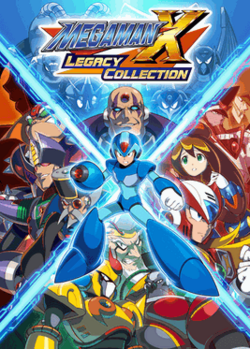
 Mega Man X Legacy Collection 2 on Xbox One
 Combat Elite: WWII Paratroopers on PS2
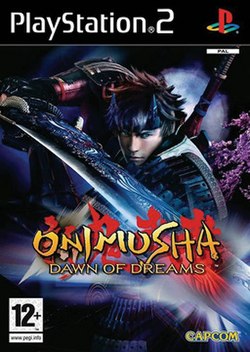
 Onimusha: Dawn of Dreams on PS2
 Disney's Chicken Little: Ace in Action on PS2
 Tokyo Xanadu eX+ on PS4
 Monster Hunter Rise on Switch
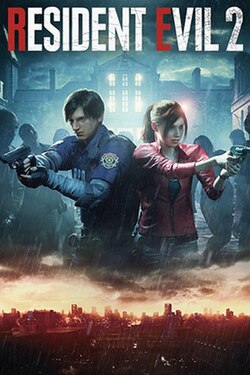
 Resident Evil 2 on PS4
 Ultra Street Fighter IV on PS3
 Street Fighter 6 on PS4
 Resident Evil 7: Biohazard on PS4










 Another SquareThought Site