

 Jan 1994
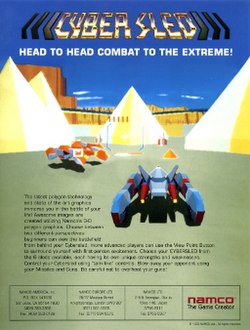

Arcade Archives 2: Cyber Commando is the nostalgia-fueled sequel that grew out of Namco's early-90s tank-in-an-arena conceit. The original lineage begins with Cyber Sled (1993), a polygonal, arcade-y vehicular brawl that let you pilot hover-tank things through destructible arenas, swap viewpoints, and spam missiles until your fingers cramped. Cyber Commando (1994) continued that chaotic multiplayer DNA, and this Arcade Archives re-release lands those same bruiser instincts on the handheld-to-living-room hybrid that is the Nintendo Switch 2. This review is less about frame rates and more about people-shaped tanks: who they are, how they evolve in a five-minute deathmatch, and why you'll find yourself emotionally invested in a boxy death-vehicle called "The Heavy" by the end of the second round.
At its mechanical core Cyber Commando is a beautifully simple, ruthlessly competitive game of cat-and-missile. You pilot a hovercraft-tank through an arena full of destructible walls and power-ups. Those power-ups - radar boosts, extra missiles, shield recharges - are the currency of momentum: grab one and you go from corner-camping sadboy to urban legend. Players choose from eight different tanks ranging on a scale from "armored turtle" to "bullet-magnet hummingbird." The controls are arcade-accurate in spirit: two analog joysticks per player, each with a finger trigger for a steady bullet stream that can overheat if abused, and a thumb trigger that fires a handful of missiles. Overheating introduces an honest-to-God pacing problem you can exploit: hold the finger trigger while sprinting and you'll love the taste of embarrassment when your guns go cold at the worst possible second. Those mechanics give rise to characters - and I mean that literally, in a dramaturgical sort of way. Each tank archetype plays like an RPG class with a personality and an arc. The Heavy starts every match slow and defensive, relying on shields and a plodding cannon. Early-game he's predictable. Mid-match he learns to bait enemies into tunnel fights where walls make him a tank-sized anvil. Late-game he graduates to myth: a walking, rolling object lesson in how momentum and patience win duels. The Speedster, conversely, is the loud, reckless son of an unforgiving spawn system; quick, low-shield, and prone to dramatic misplays, she either racks up a highlight reel or explodes spectacularly into pieces. The Rookie is fun because his arc mirrors yours: at first he dies a lot, then he learns to corner-camp just enough to survive, and eventually he pulls off a clutch missile that rewrites his story. The arena itself is not just a backdrop but a supporting character with a revenge arc. Walls that can be destroyed act like old grudges - useful to hide behind early, treacherous when they fall. Power-ups carry the narrative function of sudden chance: a radar pickup at minute two can flip a suicide run into a cunning assassination. The missile versus bullet tension reads like a recurring subplot. Bullets, with their overheating mechanic, are the dependable long-term lover who needs space; missiles are the one-night-stand that costs you a finite resource. Managing that relationship is half the fun. Multiplayer is where character arcs go soap-opera. Cyber Commando lives or dies with the social chemistry of your couch or online lobby. Two-player matches turn the game into a conversation: taunts, learned tells, and the slow psychological conditioning that says "don't peek the same wall twice." Solo play gives you the satisfaction of learning each archetype's timings, a study in how to turn a slow tank into a psychological wrecking ball by using the environment. The viewpoint toggle between third-person and cockpit view changes how you experience identity in the match: third-person makes your tank a caricature, a puppet to be spammed; cockpit mode is intimate - suddenly you're that pilot, and overheating feels like a betrayal. Cyber Commando doesn't reinvent the wheel of vehicular combat, but it polishes certain spokes. The simplicity of its systems encourages emergent storytelling: every match is a short, punchy narrative in which characters rise and fall, mistakes become signatures, and your favorite tank grows a little legend of its own.
The original series wears its polygonal heart on its blocky sleeve. Cyber Sled and its successor were early experiments in 3D polygons, and Cyber Commando's visual language is unapologetically chunky. On modern hardware like the Switch 2 the polygons look retro in the way neon signs and cassette tapes look retro: intentionally honest, slightly charming, and occasionally hilariously low-res. The PlayStation era allowed an alternative texture-mapped mode that smoothed out some edges, but the arcade aesthetic is still the true flavor - crude geometry that reads as readable chaos during a hectic match. Critics at the time were split: some praised the graphics as a clean, speedy style that served multiplayer well; others grumbled that it could've been done on lesser hardware. Either way, the visual clarity is a gameplay strength: walls, missiles, and tanks are never ambiguous, so your focus stays on strategy and spectacle rather than guessing what you just hit. Sound design is similarly utilitarian: chunky engine tones, satisfying missile thumps, and the arcade blips that make every pickup feel like a small win. It won't win awards for photorealism, but the aesthetic supports the drama and, importantly, the readability of the arenas.
Arcade Archives 2: Cyber Commando brings a compact, character-driven blast from Namco's polygonal past to the Switch 2 with all the quirks intact. This is a game that thrives on short, intense rounds where archetypes - the Heavy, the Speedster, the Rookie, et al. - carve little sagas into your memory. Its mechanics are lean but clever: overheating bullets force restraint, limited missiles reward timing, and destructible arenas create shifting narrative spaces. The visual package is retro but intentional, favoring clarity and speed over bells-and-whistles fidelity. Reception back in the day was mixed - loved in arcades for its multiplayer rush and criticized on consoles for perceived lack of spectacle - and that remains a fair summary now. If you're into bite-sized competitive matches and enjoy assigning personalities to boxes with wheels, Cyber Commando offers surprisingly rich stories per minute. For everyone else craving modern sheen and single-player depth, this will feel like a charming relic. Score: 7/10 - a solid arcade heirloom that's more about the people you bring to play than the pixels on the screen.
 Oretachi Game Center Zoku: Rabio Lepus on PS2
 Arcade Archives 2: Ridge Racer on PS5
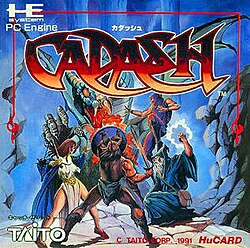
 Arcade Archives: Cadash on PS4
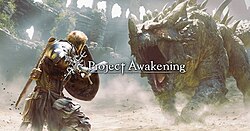
 Project Awakening on PS4
 Neverway on Switch
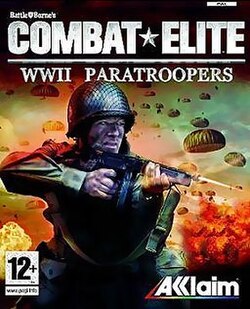
 Combat Elite: WWII Paratroopers on PS2
 Orphen: Scion of Sorcery on PS2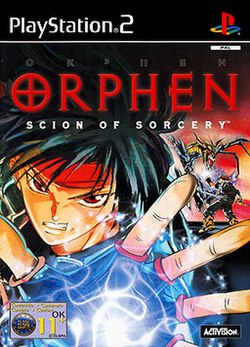
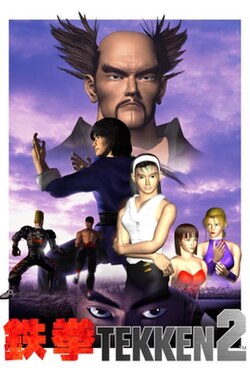
 Tekken 2 on PlayStation
 Pac-Man Championship Edition DX+ on PS3
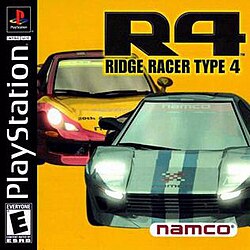
 R4: Ridge Racer Type 4 on PlayStation
 Tales of Arise on Xbox Series X/S
 Tekken on PlayStation










 Another SquareThought Site