

 Jan 1979
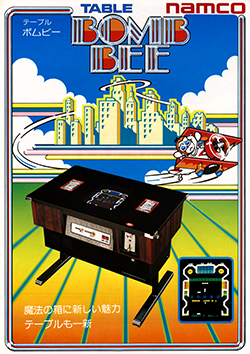

Arcade Archives 2: Bomb Bee is Namco's late-1970s answer to the 'let a tiny ball bounce around and ruin your high score' school of design. Packaged for modern consoles as part of the Arcade Archives series, it hands you a plainly honest arcade relic: two paddles, a bouncing ball, a wall of colored bricks, and score rules so old-school they smell faintly of cigarette smoke and LED lights. The historical footnotes are neat - this is one of Toru Iwatani's early designs and one of Namco's first commercial touches with Nintendo - but the meat of Bomb Bee is pure mechanical challenge. If you enjoy games that demand micro-adjustments, prediction, and a willingness to die in increasingly creative ways, Bomb Bee is a compact gym for those particular skills.
Bomb Bee dresses itself up as a hybrid of block-breaker and video pinball, and that pairing is what defines the challenge. Control is via a rotary analog input in the original - translated to modern sticks on Xbox - and you manipulate two paddles that ricochet a single ball around the playfield. The core objective is straightforward: hit the colored bricks above to clear them, manipulate side mechanics to convert pop-bumpers from meek 10-point nuisances into gleeful 100-point geysers, and aim to light the letters that spell NAMCO for bonuses. Sounds simple until the ball finds a seam between two paddles, starts doing quantum physics, and ruins your carefully laid plans. The skill set Bomb Bee insists you cultivate is narrow and precise. First and foremost is spatial prediction. The ball obeys a deterministic, unforgiving physics that rewards players who can visualize ricochets three or four moves ahead. Where will the ball be after a stomach-churning bank off the top wall? Which paddle angle will send it into a side lane for a valuable pop-bumper spree? Bomb Bee does not hand-hold - it expects you to build a mental map of trajectories and then act on it. That mental map is the difference between making the pop-bumpers sing and watching your score evaporate in a single stray ricochet. Fine motor control and stick discipline are next. The rotary control means subtle rotational inputs produce subtle angle changes in the ball, and on Xbox the right stick replaces that sensation. Over-correct and the ball flies to the far side; under-correct and it clips the bricks at an unfortunate shallow angle and bounces back to death. Timing is everything: the briefest hesitation will convert a promising volley into a painful loss. Bomb Bee is a game where the difference between survival and sudden death can be a sixteen-pixel timing window and a half-degree paddle rotation. If you are proud of your thumb steadiness, this game will test your ego. Risk assessment and score optimization form the strategic layer. Clearing side sections flips a pop-bumper from 10 points to 100, an enormous increase that changes how you prioritize targets. Do you take the safer route of nibbling away at middle bricks to stay alive, or do you gamble on cleaning a side cluster to unlock the bumper multiplier and set up a high-value run? The game rewards players willing to plan risky bounces and punish those who play it safe without purpose. Lighting the NAMCO letters isn't automatic; it requires specific shots and a little serendipity, so both intention and improvisation matter. Persistence and pattern recognition are the quiet demands. There are no power-ups, no special abilities, and no infinite lives. This is old-school design where the only progression is your improvement. You learn which portions of the brick layout consistently yield favorable angles, which pop-bumper moods are fickle, and how to steady your hands when the action speeds up. Multiplayer is hotseat-style two-player alternating, which means practice isn't about co-op rescue missions but about outlasting someone else's score and watching them fail hilariously while you wait your turn. Difficulty curve wise, Bomb Bee sits in a peculiar place. It is deceptively accessible: a few minutes with the controls and you can keep the ball moving. It quickly becomes a razor test for precision as the play speed ramps subtly and the scoring incentives tempt you into riskier plans. The challenge is not from enemy complexity or level gimmicks; it is the relentless requirement for perfect geometry and tiny mechanical mastery. If you enjoy muscle-memory improvement and cerebral patterning rather than flashy spectacle, this game is a delightful, if terse, drill.
Graphically, Bomb Bee is frank about its era. For 1979 it was notable for a full-color display, which sounds almost charmingly quaint today. The Arcade Archives port preserves the original pixel shapes and blocky palettes, which is both a virtue and a limitation. There is clarity in the visuals: paddles, ball, bricks, and bumpers all read instantly, which matters because the game's demands are split-second. You do not need fancy bloom to tell whether a pop-bumper is set to 100 points; a small color change and the tiny NAMCO indicators do the communicating. On modern hardware the visuals are a museum piece. There is not much animation, no particle effects, just efficient information design. That cold-blooded functionalism supports the gameplay: when everything is crisp and static, you can focus entirely on trajectory and timing. Nostalgia buffs will appreciate the faithful emulation, and newcomers will find the minimalism either charmingly retro or brutally spare depending on tolerance for primitive aesthetics. Sound design follows the same philosophy: short, satisfying blips and voice-less chimes that announce success or failure with the brusque dignity of an old arcade cabinet.
Arcade Archives 2: Bomb Bee is less a game in the modern, content-rich sense and more a mechanical exam in precision, timing, and strategic risk-taking. Its historical value is real - early work from Toru Iwatani and an early Namco-Nintendo relationship - but its enduring appeal rests on whether you enjoy pure skill tests. Players who want narrative, variety, or shiny rewards will likely find it thin; those who love honing a single set of tight, unforgiving skills will find a satisfying little gym. If you pick this up on Xbox Series X|S, treat it like a speed and accuracy drill. Tighten your thumb discipline, build anticipation of bounces, and learn to plan for pop-bumper conversions. Expect short runs, steep learning, and the occasional moment where everything aligns and the game rewards you with a tidy NAMCO-lit bonus. It is not a sprawling masterpiece, but as a concentrated challenge that refuses to disguise its simplicity, Bomb Bee still has sting.
 Arcade Archives 2: Air Combat 22 on Xbox Series X/S
 Arcade Archives 2: Ridge Racer on PS5
 Street Fighter V: Arcade Edition on PS4
 Oretachi Game Center Zoku: Trio the Punch on PS2
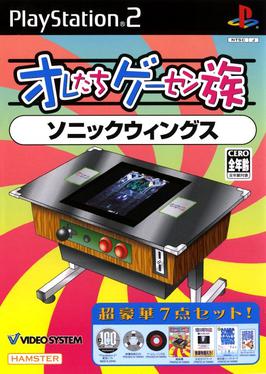 Oretachi Game Center Zoku: Quarth on PS2
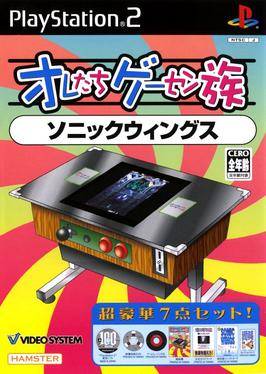 Oretachi Game Center Zoku: Super Volleyball on PS2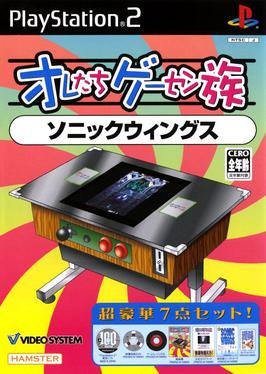
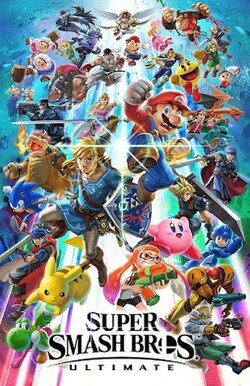 Tekken 2 on PlayStation
 Pac-Man Championship Edition DX+ on PS3
 R4: Ridge Racer Type 4 on PlayStation
 Tales of Arise on Xbox Series X/S
 Tekken on PlayStation










 Another SquareThought Site